
"tree height"
2000 article(s) found

Varieties of coffee beans
Several main coffee varieties and their characteristics are introduced here. Typica, also known as Tiberka Tibika, is the closest to the native species of Arabica, where almost all Arabica varieties originate. Widely cultivated in Central and South America in the past, the bean is long in shape and has excellent aroma and sour taste, but it is not resistant to leaf rust and requires quite a lot of shading trees to lead to production.
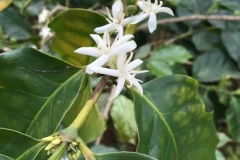
Coffee trees introduce how to grow good coffee fruit sources from seeds to fruits.
Coffee is a perennial evergreen shrub or small tree of Rubiaceae, which is a horticultural perennial cash crop. Wild coffee trees can grow to a height of 5-10 meters, but coffee trees planted on manors are often cut to a height of less than 2 meters in order to increase the amount of fruit and facilitate harvesting. Coffee trees will bloom, depending on the origin, about February-March (Northern Hemisphere) or June-July (South).

How to plant coffee trees
The planting time of coffee is from June to July after the beginning of the rainy season. The planting day is cloudy or light rainy, and can be planted all day. If the planting day is sunny, it should be planted before 11:00 and after 04:30 in the afternoon. Seedlings should choose 5 pairs of true leaves, with a height of more than 0.15 meters, and strong seedlings without branches. The row spacing of planting plants is 1.2 meters and 333 plants are planted per mu.
Selection of basic Coffee Tree Classification
Arabica Coffee and Variety improvement. What do the so-called families, genera and species of Arabica species mean in biological classification? In terms of biological classification, it is divided into boundary, phylum, class, order, family, genus and species from top to bottom, and the lower part of the species is subdivided into subspecies, varieties and varieties. Arabica coffee is generally thought to originate from the Ethiopian plateau and is widely divided.
The difference between high-altitude coffee trees and high-altitude coffee trees why high-altitude coffee bears very slow and less fruit
Ideal conditions most people think that tropical coffee is native and ideal for hot and humid environments-but this is not always the case. The best coffee actually comes from cooler, milder environments in the higher mountains of the tropics. The most suitable conditions for coffee cultivation include abundant rainfall, an average annual temperature of about 70 degrees Fahrenheit, good drainage and nutritious soil.

How to grow high-quality coffee bean seeds? What are the planting conditions that affect the growth of coffee beans?
Professional coffee knowledge exchange more coffee bean information please pay attention to the coffee workshop (Wechat official account cafe_style) how to grow high-quality coffee bean seeds? What are the planting conditions that affect the growth of coffee beans? Coffee beans are generally graded according to their size, defect rate and altitude. The size and defect rate of raw beans are easy to understand, and many people do not quite understand why some producing areas

Liberian coffee beans-types of Italian coffee
Liberian coffee beans-Italian coffee species Liberian species (coffea liberica) do not want to go into detail here, because his trading scope is very small, usually not used, what we are talking about is not very often, so let's briefly describe it here. Liberian coffee originates in West Africa and is suitable for all kinds of rings, whether high or low, wet or dry.

The planting technology of coffee tree introduces the environment in which coffee tree is suitable to grow.
Field management of loosening soil and weeding: when the seedling height is 3cm to 6cm, the weak or overdense seedlings are pulled out; when the seedling height is 10cm and 13cm, the plant distance is about 30cm. Soil loosening and weeding were carried out at the same time between seedlings and fixed seedlings to keep the soil loose. Coffee beans are more drought-tolerant, and the soil can grow normally when the soil moisture is maintained. During the drought, the coffee beans should be properly watered, but there should be less squatting seedlings during the seedling fixing period.

What conditions do you need to grow coffee trees?
Coffee is a perennial evergreen shrub or small tree of Rubiaceae. It is a horticultural perennial cash crop with the characteristics of fast growth, high yield, high value and wide market. Wild coffee trees can grow to a height of 5 to 10 meters, but coffee trees planted on the manor are often cut to a height of less than 2 meters in order to increase the amount of fruit and facilitate harvesting. The opposite leaves of coffee trees are long oval.
Coffee trees and three kinds of native species
Coffee trees and three kinds of native coffee trees are evergreen shrubs or trees belonging to the Rubiaceae family. Wild coffee trees can grow to a height of 5 to 10 meters, but coffee trees planted on the manor are often cut to a height of less than 2 meters in order to increase fruit and facilitate harvesting. The opposite leaf of the coffee tree is long oval, the leaf surface is smooth, the end branch is very long, the branch is few, and the flower is white.

Cultivation techniques of small-grain Coffee integral pruning of Coffee trees
Single trunk shaping is a method of cultivating a trunk, using the primary branch as the backbone branch and the secondary and tertiary branches as the main fruiting branch. Single-stem plastic surgery usually takes the measure of removing the top to remove the terminal bud and promote the growth of branches. ① one-time topping method: when the coffee tree is 1.5-1.7 meters high, cut off the terminal bud. There are also those who reached the top at 1.8 to 2.2 meters high. ② multiple topping method: score

Introduction of planting methods of coffee trees introduction of planting conditions of various coffee trees which country is the most suitable for planting
Field management of loosening soil and weeding: when the seedling height is 3cm to 6cm, the weak or overdense seedlings are pulled out; when the seedling height is 10cm and 13cm, the plant distance is about 30cm. Soil loosening and weeding were carried out at the same time between seedlings and fixed seedlings to keep the soil loose. Coffee beans are more drought-tolerant, and the soil can grow normally when the soil moisture is maintained. During the drought, the coffee beans should be properly watered, but there should be less squatting seedlings during the seedling fixing period.
The technique of growing small Coffee-- integral pruning
Cultivation technique of small-grain coffee: integral pruning. Single trunk plastic surgery is a method of cultivating a trunk, using the primary branch as the backbone branch and the secondary and tertiary branches as the main fruiting branch.

Three native species of coffee, Liberian species, Robusta species, Arabica species.
Coffee, we generally refer to the finished product: the coffee we drink, also refers to coffee beans. Coffee belongs to the evergreen shrub of the genus Coffee of Rubiaceae. Coffee has some medicinal effects, such as waking up the brain, strengthening the stomach, stopping bleeding, dissipating heat, strengthening the body, etc., hee hee, if anyone is blinded by love, have a cup of coffee to wake up! There are about 40 species of coffee plants, but they can produce commercially valuable

An introduction to the four major producing areas and manors in Guatemala-- Raminita Manor in Miniguo Heights
To really understand the flavor changes and product differences of coffee beans is to understand the production place and growers, different manors with different flavors, or different flavors on different hills of the same manor, and the story behind each coffee bean is what the fragrance wants to know. It can be traced back to which plot of the estate where the beans came from, or which cooperative or which farmer, chasing the flavor of the region. To

Panamanian Flint Manor Honey treatment of Kaduai SHB Fine Coffee Bean cultivation Geographic location and Climate
Variety: Catuai Kaduai processing plant: flint manor flavor: lemon, orange, cranberry, green tea Kaduai (Catuai): Kaduai is a hybrid of New World and Kaddura. It inherits the advantage of low height of Kaddura tree and helps inherit the advantage of low height of Kaddura tree. The variety name Catuai comes from vernacular, meaning very good (very good). As

Cultivation technique of small-grain coffee: integral pruning
Cultivation technique of small-grain coffee: integral pruning. Single trunk plastic surgery is a method of cultivating a trunk, using the primary branch as the backbone branch and the secondary and tertiary branches as the main fruiting branch.

Is Arabica bean caffeine high? How to make Arabica coffee beans? Arabica coffee
Professional coffee knowledge exchange more coffee bean information please pay attention to the coffee workshop (Wechat official account cafe_style) Arabica beans caffeine content? How to make Arabica coffee beans? What is the flavor and taste of Arabica coffee? Arabica: expensive, supple, low-caffeinated coffee ads often emphasize their use of the 100% Elaraby

A brief introduction to the History and Culture of the Origin and Development of Panamanian Flint Manor Coffee
Catuai: Catuai Kaduai is a hybrid of New World and Kaddura. It inherits the advantage of low height of Kaddura tree and helps inherit the advantage of low height of Kaddura tree. The variety name Catuai comes from vernacular, meaning very good (very good). As a member of Arabica family, Catuai is relatively high-yielding. Cup test flavor: dry fruit, rich
Coffee Encyclopedia on the growth of Coffee trees
Coffee trees are evergreen shrubs or trees belonging to the Rubiaceae family. Wild coffee trees can grow to a height of 5 to 10 meters, but coffee trees planted in the manor are often cut to a height of less than 2 meters in order to increase their yield and facilitate harvesting. The opposite leaves of the coffee tree are long oval and greasy, with long branches and few branches at the end, while the flowers are white and open on the petiole to connect the base of the branch.